After Fire 344: Understanding Wildfire Through Architecture
What can architecture contribute to our understanding of wildfire?
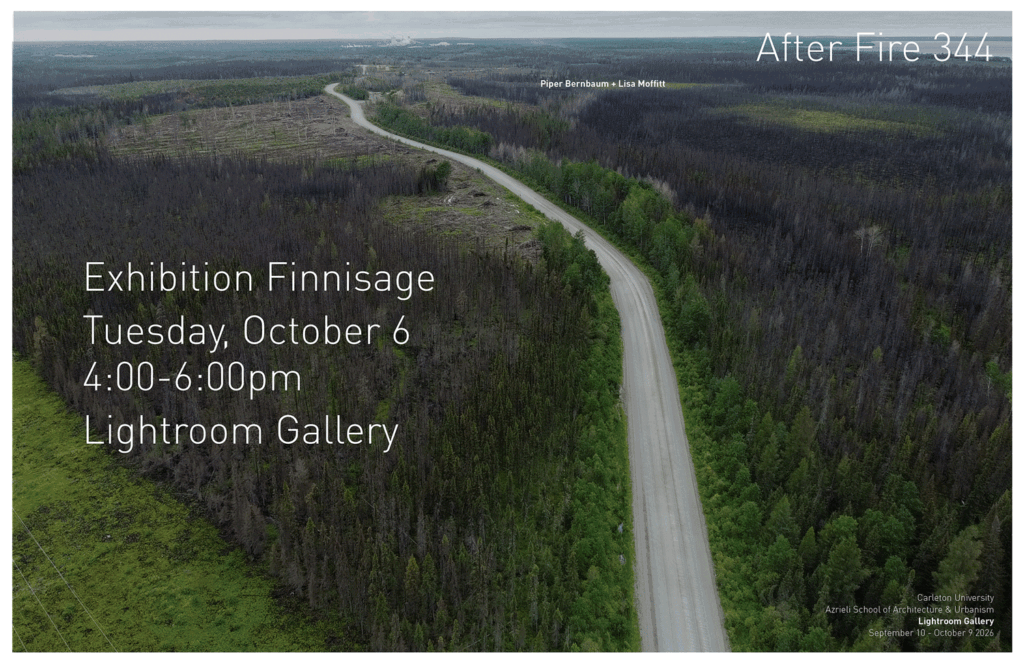
For Piper Bernbaum and Lisa Moffitt, this question became the starting point for After Fire 344, an ongoing research project examining the 2023 Québec wildfire 344 and its impacts on the community of Lebel-sur-Quévillon.
The project began in the summer of 2023, as smoke from the Québec wildfires engulfed Ottawa and travelled far beyond the fires themselves. As the smoke crossed provincial and national borders, Bernbaum and Moffitt became interested in the contrast between the enormous reach of a climate event and how little was known about the communities closest to its source.
Their research eventually brought them to Lebel-sur-Quévillon, a remote community that was evacuated twice as Fire 344 approached. The fire came dangerously close to the town without destroying it, while the surrounding landscape shaped by forestry, industry and infrastructure demonstrated the evidence of the aftermath. Rather than attempting to understand multiple communities affected by the fire, Bernbaum and Moffitt chose to focus closely on one place.
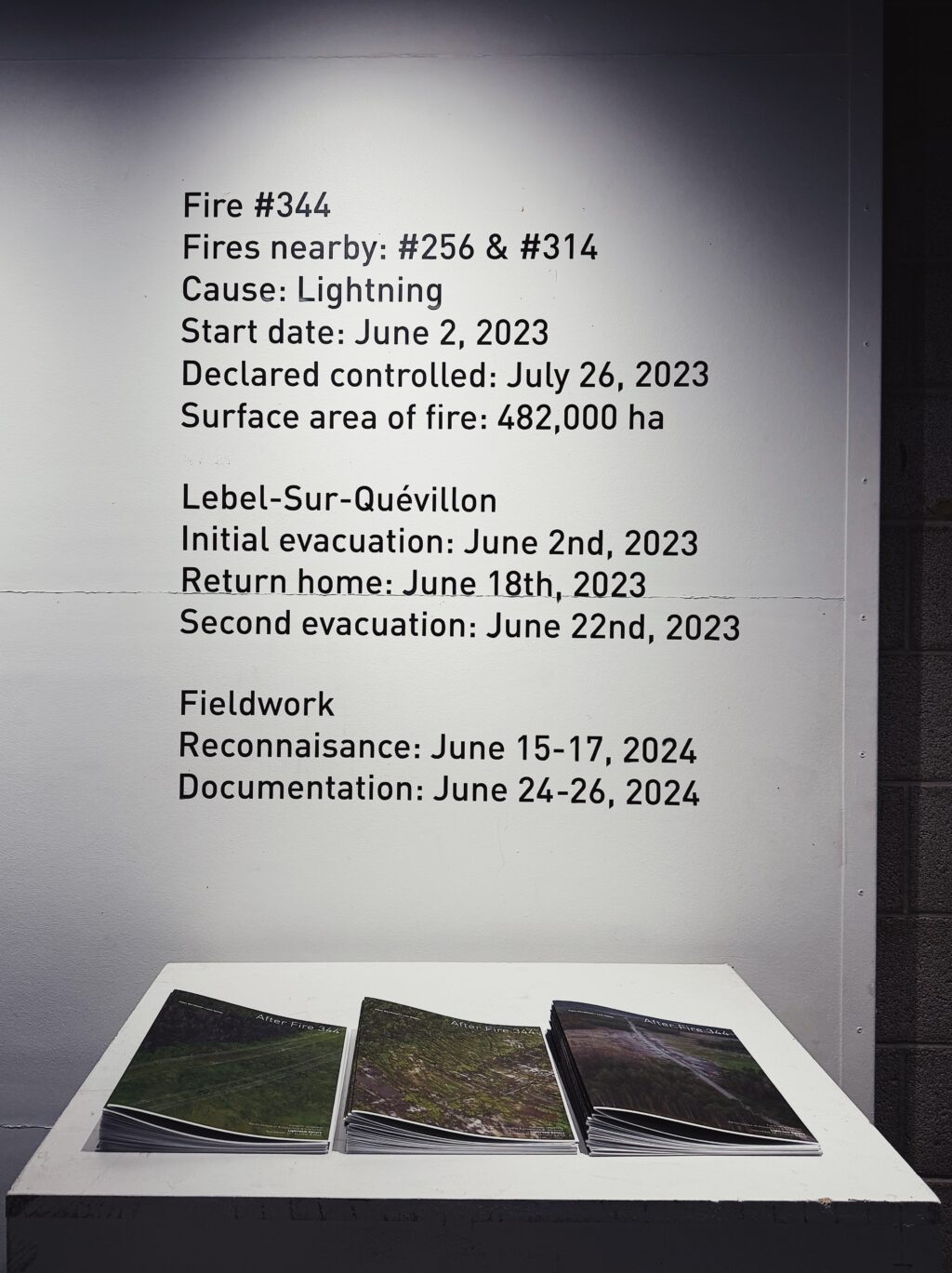
“We decided to stay with Lebel-sur-Quévillon as a way of understanding one immense fire through its effects on a particular landscape,” Bernbaum explains.
Moving Between Scales
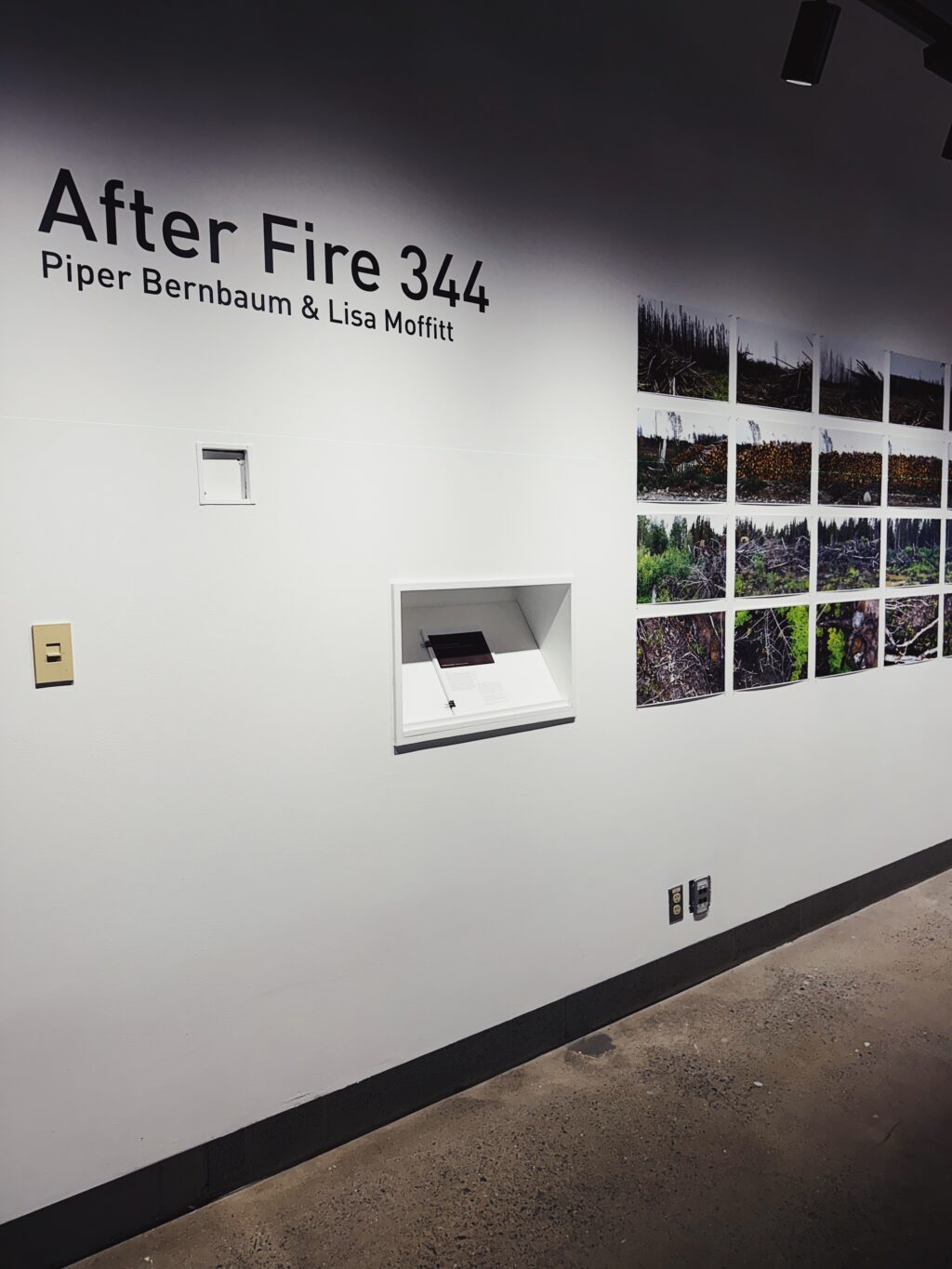
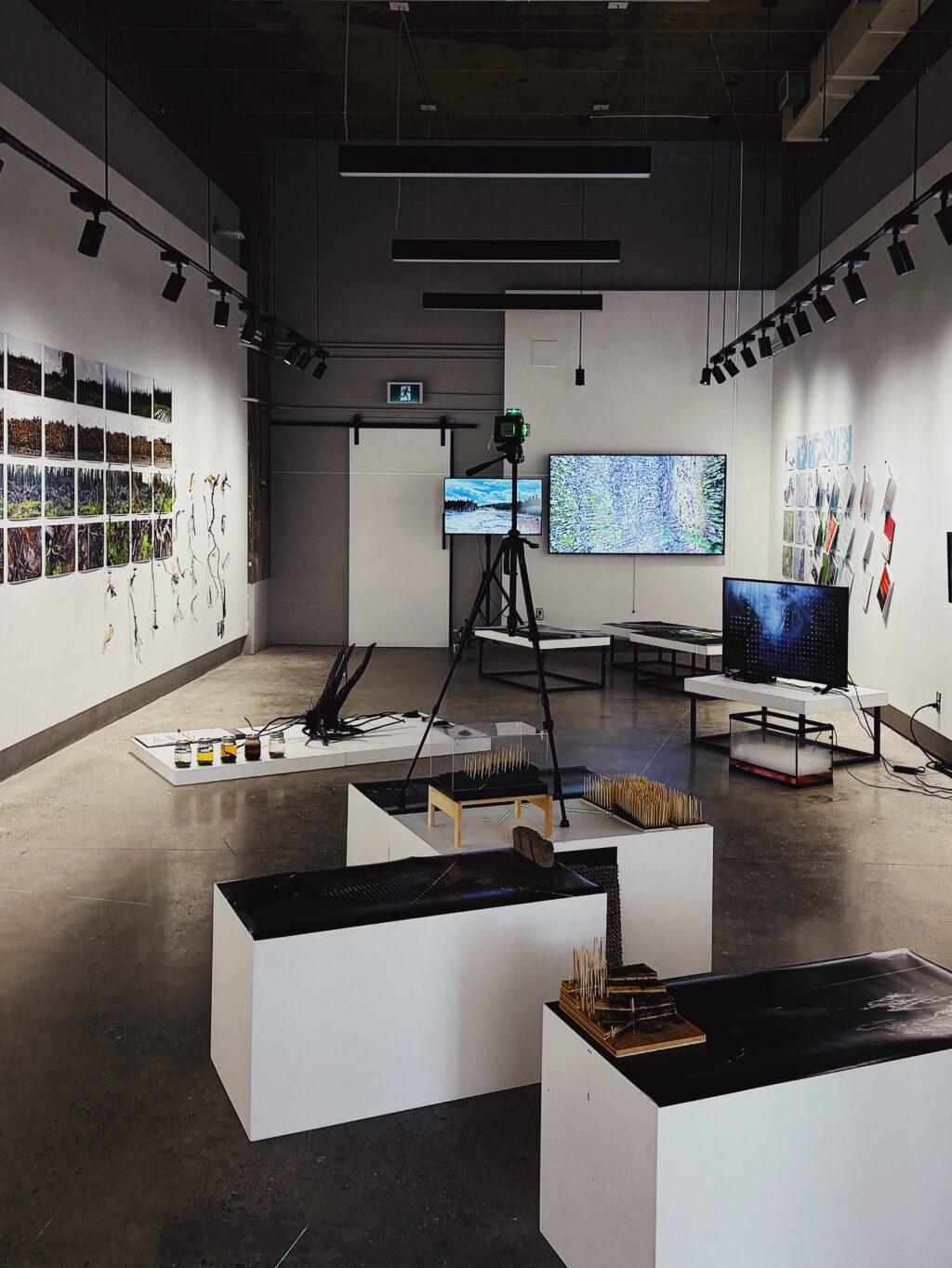
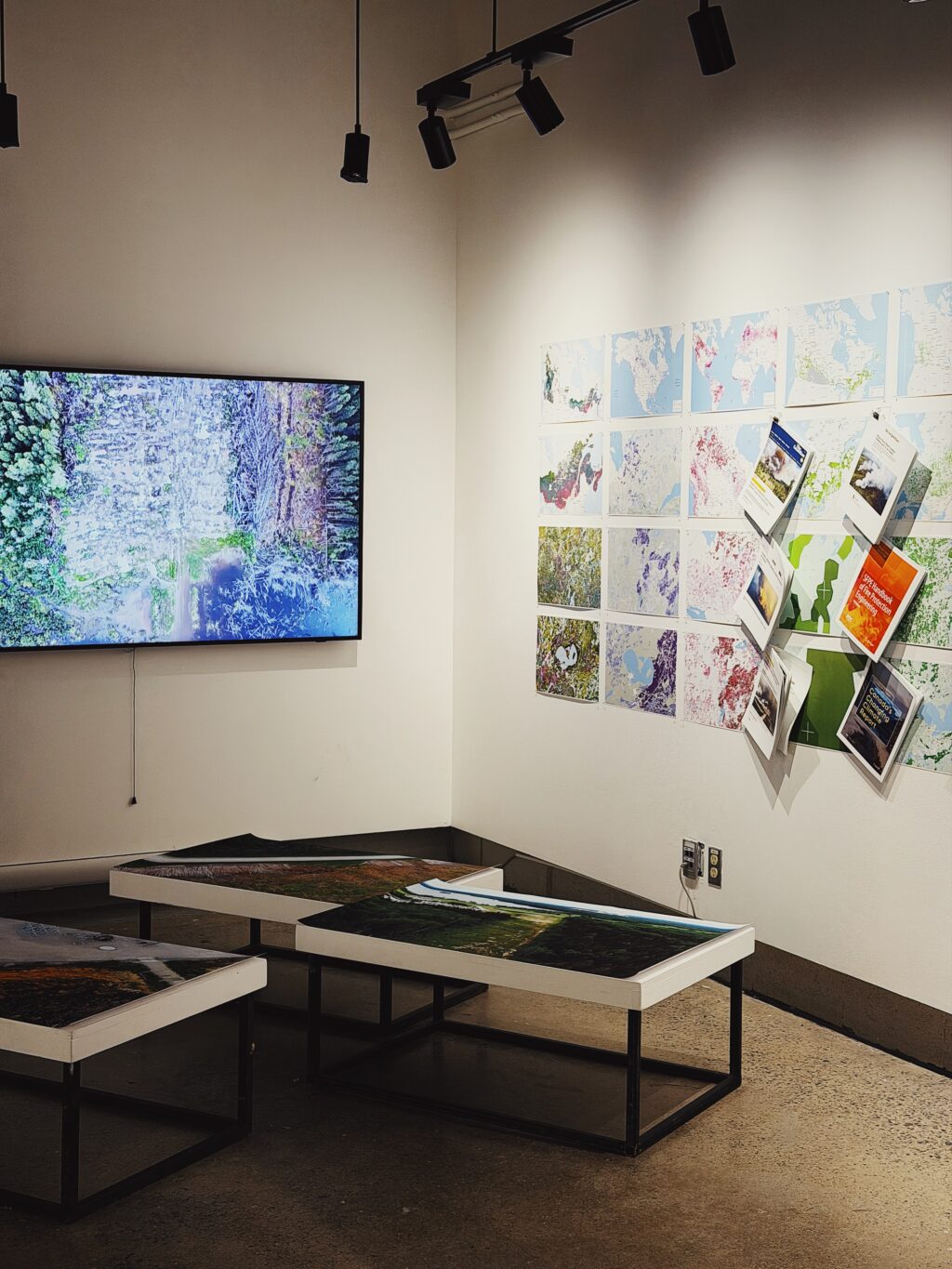
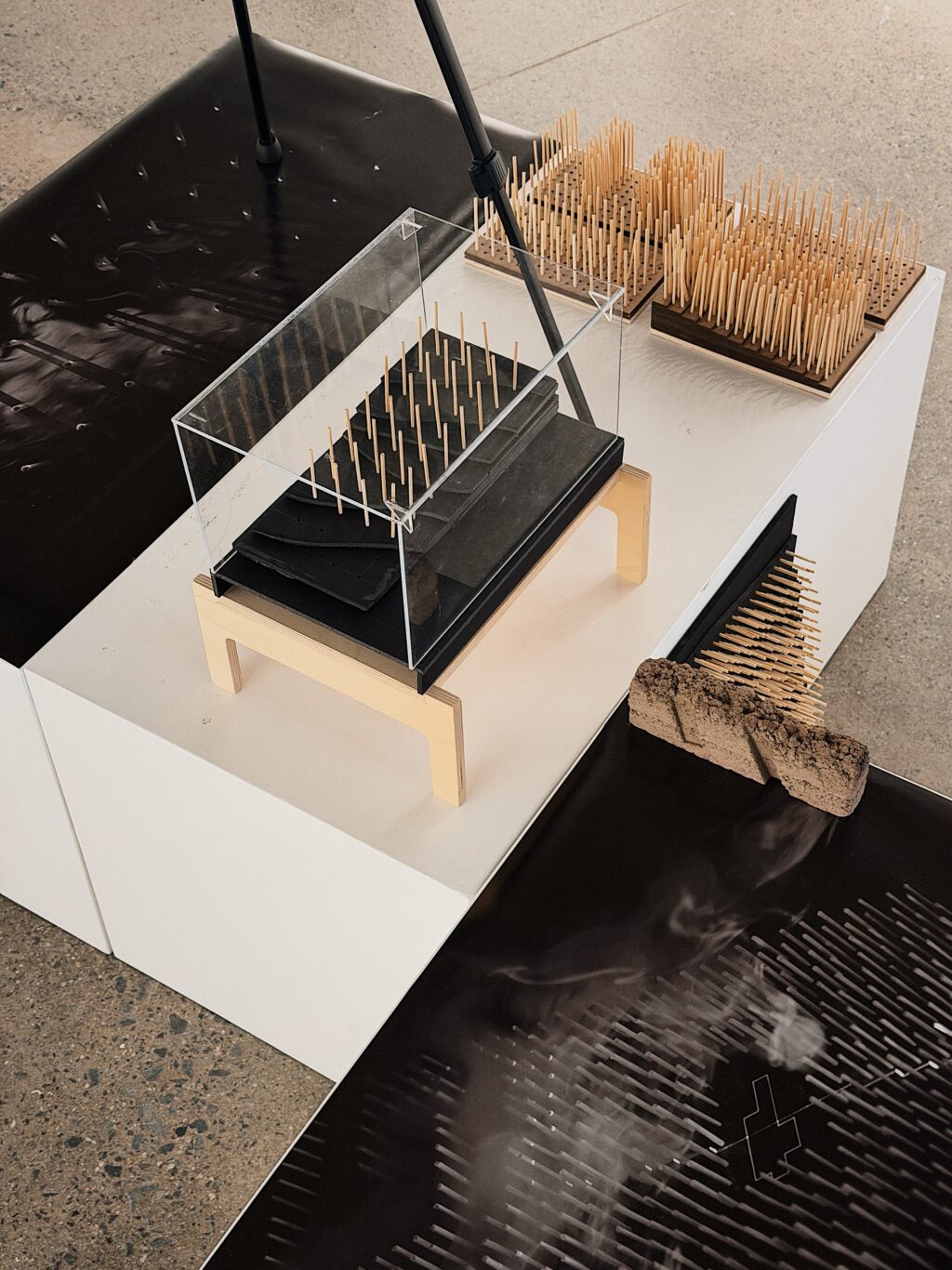
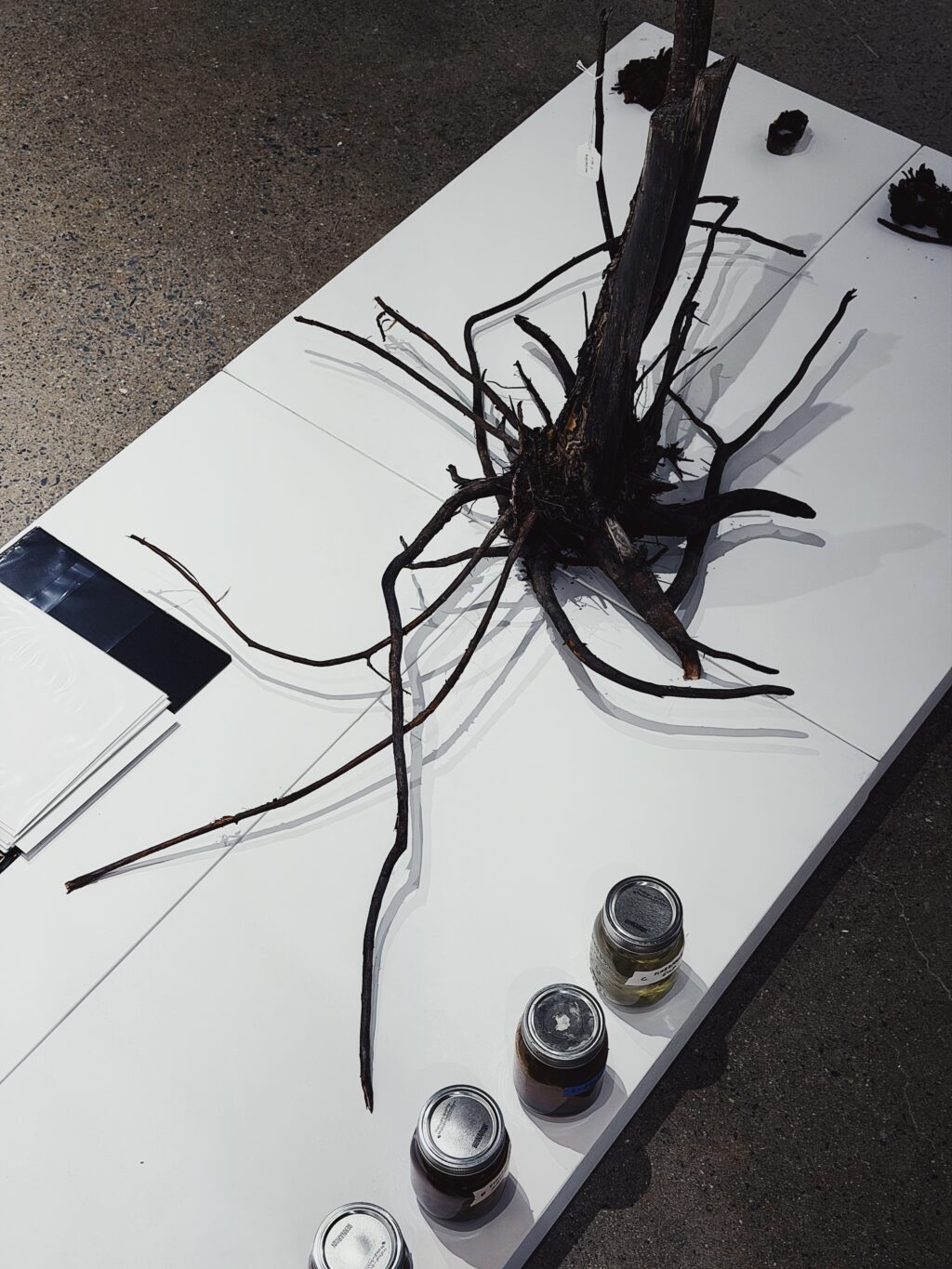
After Fire 344 uses photography, video, maps, drone imagery, material samples and physical models to examine the fire and the landscape it transformed.
For Bernbaum and Moffitt, no single form of representation can tell the complete story. Large-scale maps reveal the vast extent of the fire and the movement of smoke, but they cannot capture what happens at the scale of a clearing, a stand of trees or a piece of infrastructure. Fieldwork, photography and conversations with community members provide another layer of understanding, while physical models allow the researchers to explore processes and relationships that are difficult to grasp through images alone.
Moffitt approached the project in part through small-scale experiments inspired by fire-engineering methods. The models illustrate variables such as the chemical composition of leaves and bark, and the roles that wind and topography play in fire ignition and spread.
“These models and their photographic documentation capture the detachment of smoke as a moving material system,” Moffitt explains, “highlighting its diffusion and expansiveness, and its capacity to expand, reach, and impact geographies well beyond that initial source.”
The models are not intended to reproduce or predict a wildfire. Instead, they act as explanatory tools—ways of making complex processes tangible and legible.
This movement between scales is central to the project. Regional maps demonstrate the magnitude of the event, while fieldwork reveals the smaller, ongoing ways in which the fire continues to reshape the land.
Reading the Landscape After the Fire
One of the most compelling discoveries for Bernbaum was that the landscape recorded much more than the fire itself.
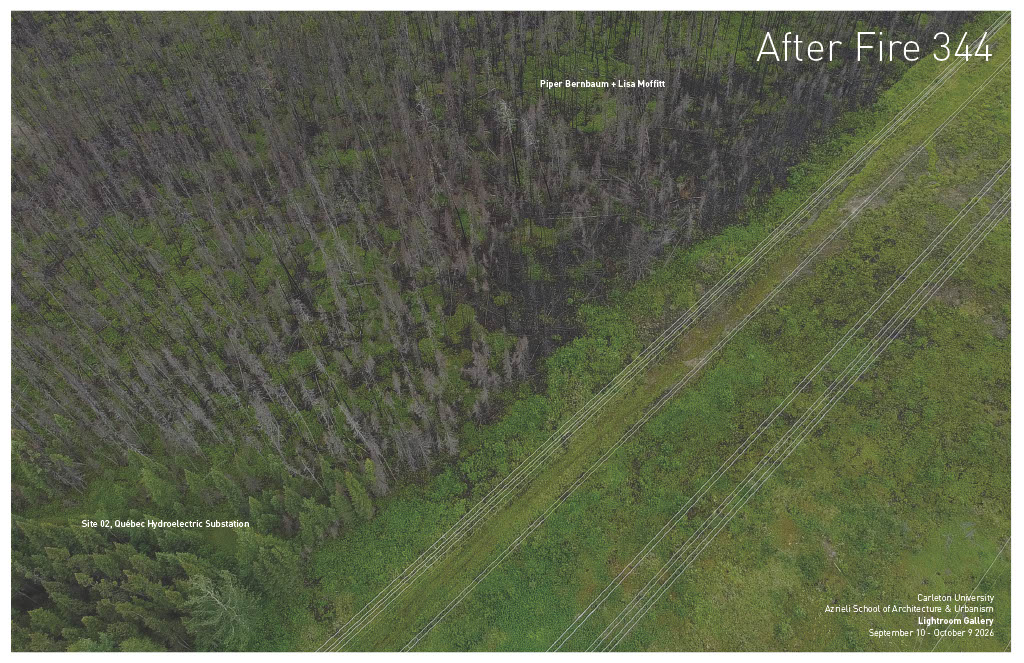
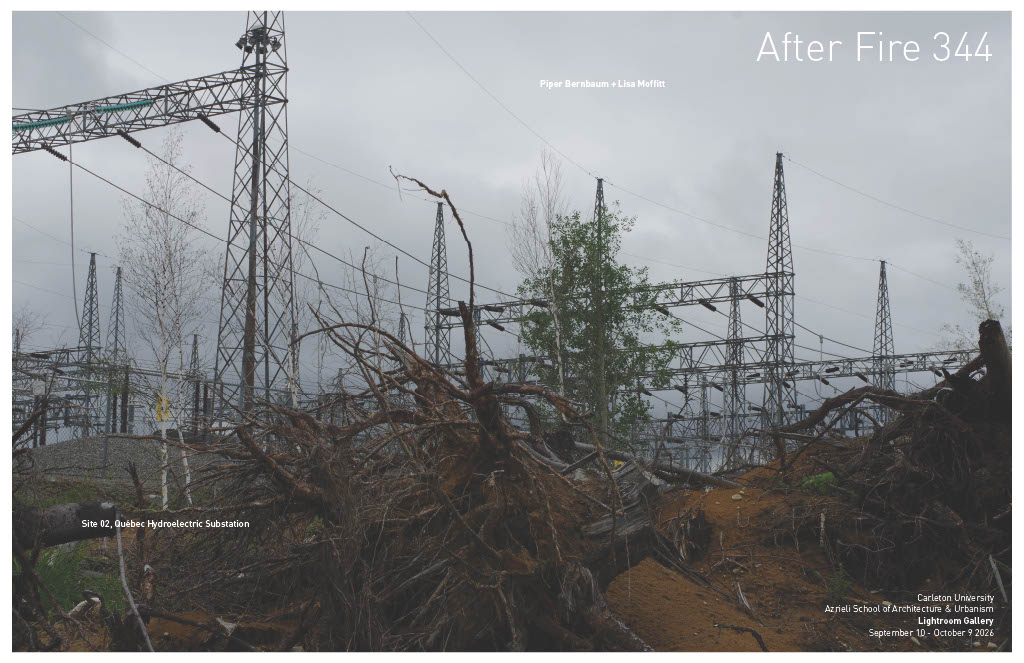
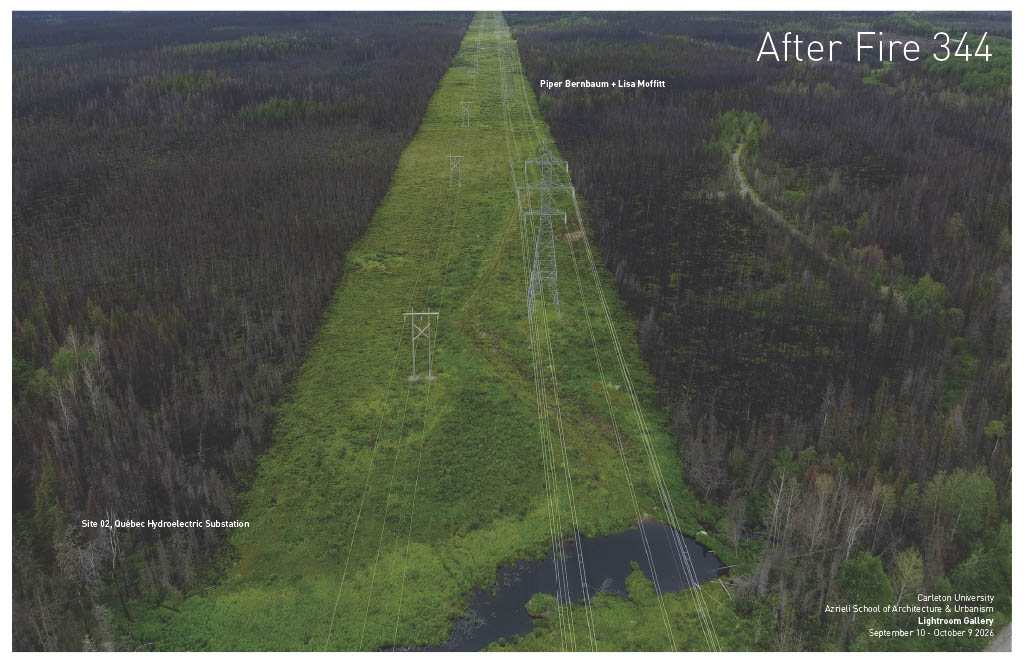
Bernbaum and Moffitt both encountered burned trees and ground, but also evidence of the decisions people made during and after the emergency. The firebreak surrounding Lebel-sur-Quévillon was particularly striking. Created during the emergency response to protect the town, it dramatically altered the landscape through cleared ground, displaced earth and berms of trees. At a nearby hydroelectric substation, the pair observed cut stumps among burned trees and learned about the dangerous work involved in removing trees during the fire.
“These traces resist a simple story of destruction followed by recovery,” Bernbaum says. Instead, they provide what she describes as a kind of “ground truth”—evidence that becomes visible after the immediate news coverage has ended.
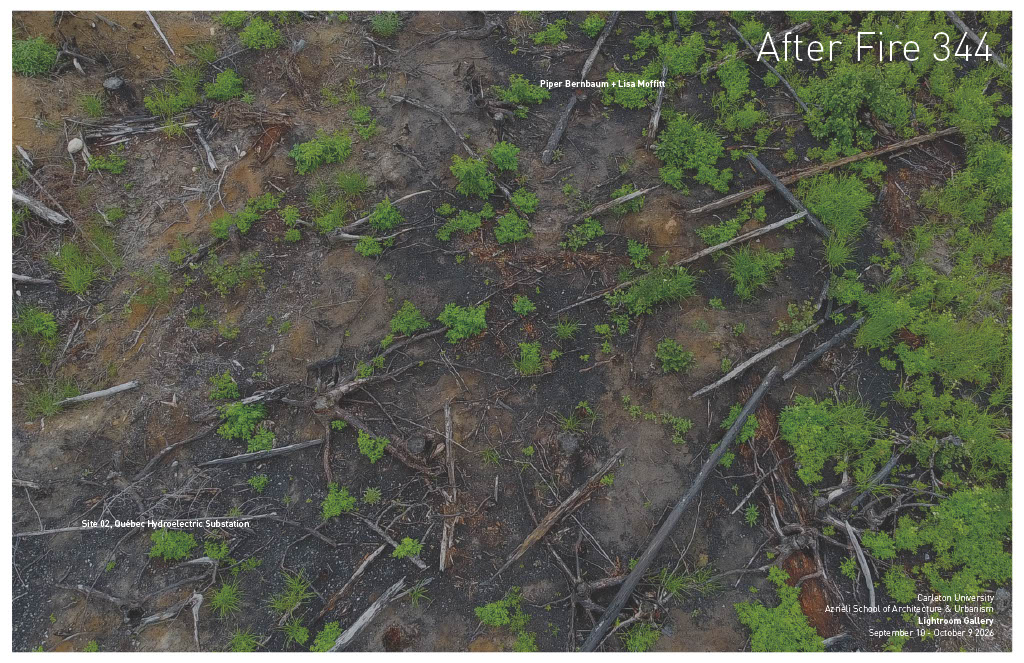
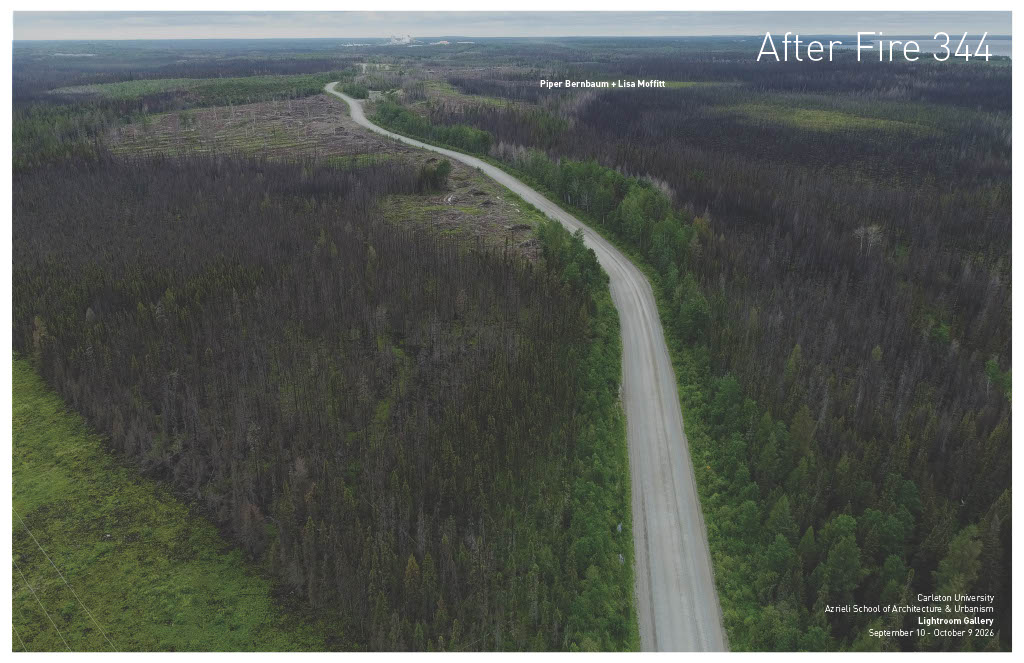
A year after the fire, the landscape was still registering loss, human intervention and the beginnings of a changed ecology.
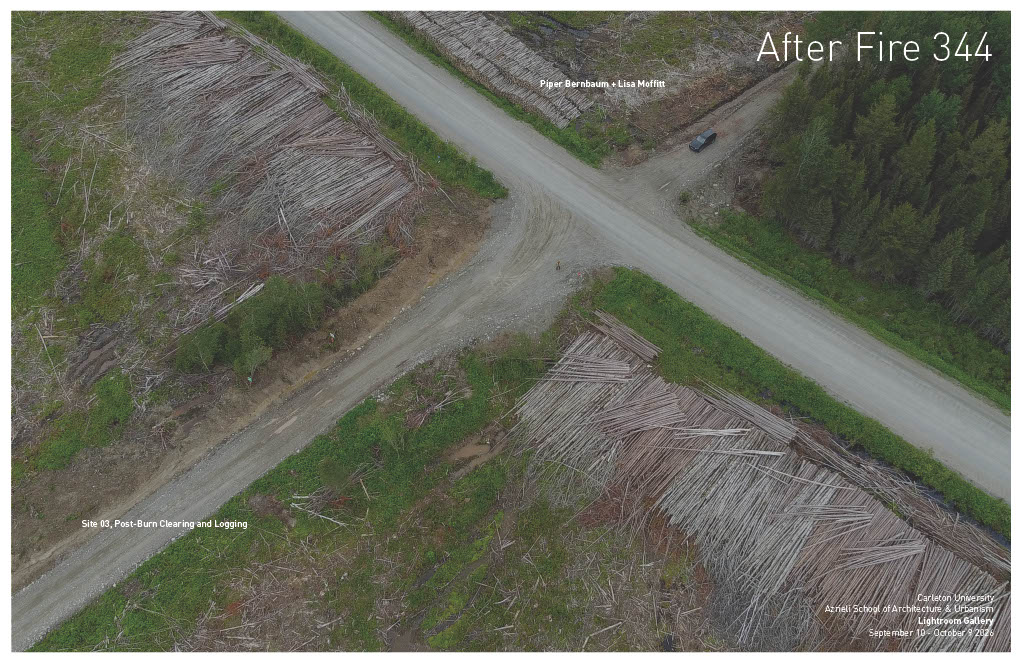
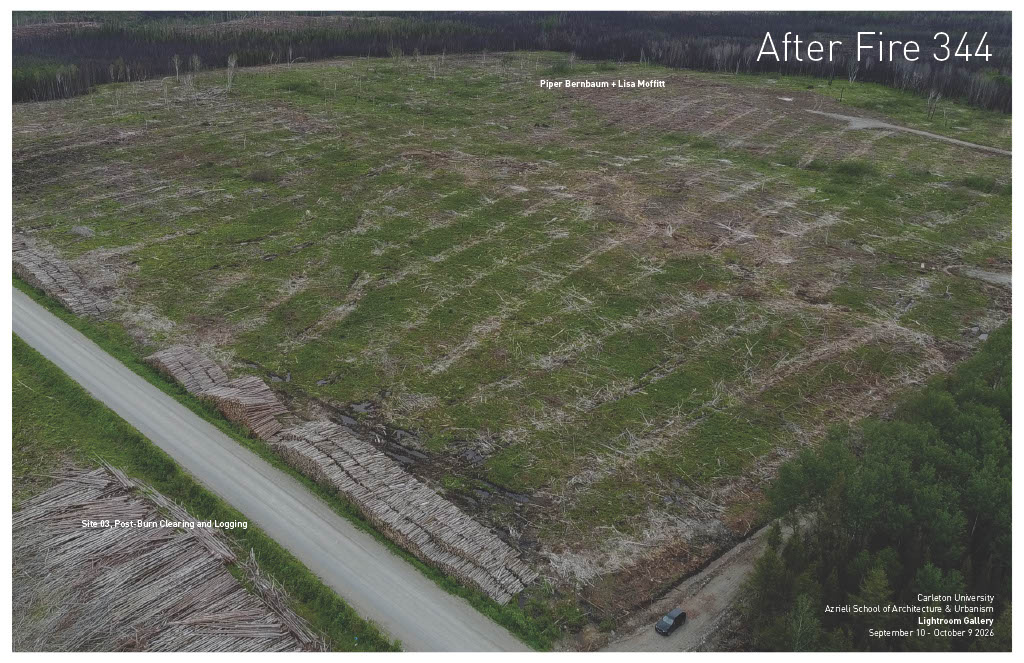
Moffitt was similarly struck by what emerged through sustained time on site. They returned to Lebel-sur-Quévillon nearly a year after the fire and documented three sites of particular significance: the firebreak, the hydroelectric substation and a post-fire landscape being actively logged and managed to support the local economy.
At the firebreak, they recorded birds and insects filling the landscape with sound. The area that had been hastily cleared to protect the town was beginning to transform into a meadow.
“There is a strange beauty present in that landscape,” Moffitt says, “which is ultimately both a scar and a buffer from future fire, a reminder of what once was and what might be again in the future.”
Rethinking the Wildland-Urban Interface
The research has also challenged how Bernbaum and Moffitt think about the wildland-urban interface (WUI).
The WUI is often understood in terms of proximity—the distance between buildings and vegetation that could burn. But Lebel-sur-Quévillon demonstrated that the relationship is much more complicated.
Protecting the town required significant intervention in the surrounding landscape. At the same time, buildings, infrastructure, vegetation and materials can themselves become part of the risk.
“For architects, the interface is therefore more than a line on a map,” Bernbaum says. “It is a relationship among buildings, materials, vegetation, infrastructure and the people who depend on them.”
For Moffitt, this raises fundamental questions about the role of architects in large, post-disaster landscapes.
“We are not landscape architects or fire scientists,” she explains. “So what skills do we bring to bear on large, complex sites that are more landscape than building?”
Their research suggests that architects can act as interlocutors between disciplines, bringing together questions of building design, material selection, landscape, community planning and evacuation. These questions exist both before a disaster—through strategies that can help mitigate wildfire impacts—and afterward, as communities respond to and reshape post-fire landscapes.
The Complicated Role of the Black Spruce
One of the project’s most unexpected findings emerged from the role of the black spruce tree in Lebel-sur-Quévillon.
The black spruce is central to the local economy and the forest industry. It is also associated with nearby mass-timber production and plays an important role in the boreal forest’s carbon storage. At the same time, it is highly flammable.
For Moffitt, this single species reveals the difficult intersections between climate change, economic development, wildfire, community life and low-carbon construction.
“The black spruce is also highly flammable,” she notes. “This one tree species acts as a crucible for highlighting some of the tensions between climate change, community, economic development, wildfire spread, and low carbon building materials.”
The tension raises important questions for architects about the relationship between wood construction, wildfire risk and conversations around carbon-sequestering building materials.
Architecture as a Way of Paying Attention
Ultimately, After Fire 344 is not intended to provide a single set of solutions to wildfire.
Instead, Bernbaum and Moffitt describe the project as a methodological pilot: an exploration of how architects can document and understand a complex site through multiple methods and scales.
They hope visitors will look closely at the different forms of documentation in the exhibition and gradually piece together a more complete picture through sustained observation, conversation and sensory engagement.
For Bernbaum, the project has reinforced the importance of listening to communities and understanding the specific landscapes, livelihoods and infrastructure on which they depend. As wildfire risk expands to communities that may not previously have considered themselves vulnerable, architects have an increasing responsibility to consider environmental risk as part of ordinary design practice.
For Moffitt, the work also expands how we might understand the architect’s role.
“In the narrowest sense, architects design buildings,” she says. “But in the widest sense, architects are spatial and material thinkers that have the capacity to tell stories of people and places in all their vulnerabilities and beauties.”
The smoke from the wildfires that prompted Lebel-sur-Quévillon’s evacuation travelled all the way to Ottawa and New York. In that sense, the fire was never confined to one remote community. Its effects reached across landscapes, borders and bodies.
After Fire 344 asks us to consider those connections—and to think more carefully about how architecture might help us understand, document and respond to a changing landscape.