The Opportunity of Architecture: Mitchell Hall on Curiosity, Collaboration and Making Things Better
A packed Forum Lecture at the Ottawa Art Gallery explored how curiosity, collaboration and a willingness to challenge convention can shape more meaningful architecture.
What if architecture begins not with a building, but with a question?
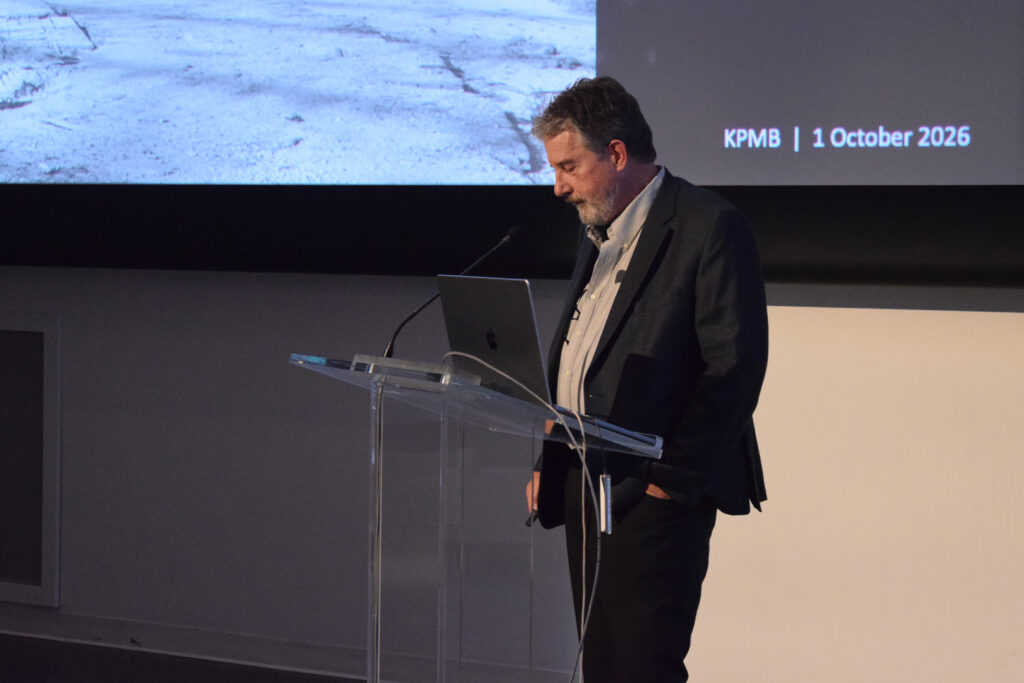
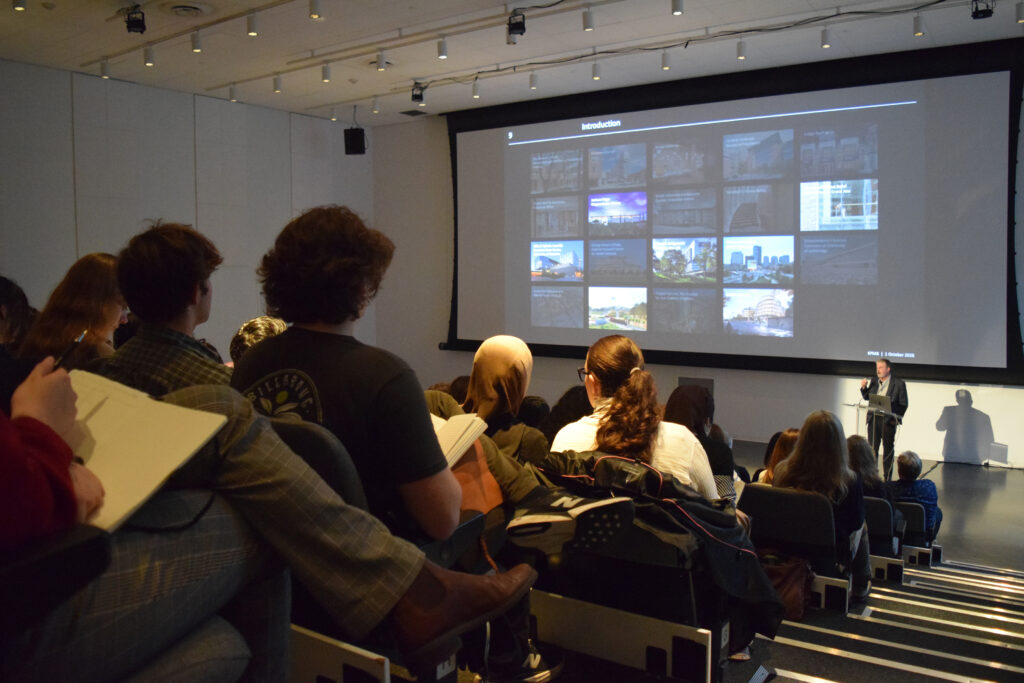
On October 1, the Azrieli School of Architecture & Urbanism welcomed Carleton University Architecture alumnus and KPMB partner Mitchell Hall to the Ottawa Art Gallery for the opening lecture of the 2026–2027 Forum Lecture Series. With a packed room of students, faculty, alumni and members of Ottawa’s architecture community, Hall reflected on more than three decades of practice and the opportunities that emerge when architects question the way things are and imagine how they could be better.
Throughout the lecture, Hall returned to a simple but powerful idea: architects must learn to observe the world around them, listen carefully, ask questions and remain curious. Rather than accepting existing conditions as fixed, he encouraged the audience to look for opportunities to innovate and improve the environments people inhabit.
Architecture is a collaborative act
Drawing on projects across culture, education, healthcare and public life, Hall demonstrated how architecture responds to challenges that are rarely solved by design alone. Every project involves a team, and its success depends in large part on understanding the people and institutions it serves.
Clients, he emphasized, contribute significantly to the success of a project. Learning about their needs is essential to developing architecture that responds meaningfully to its context and purpose.
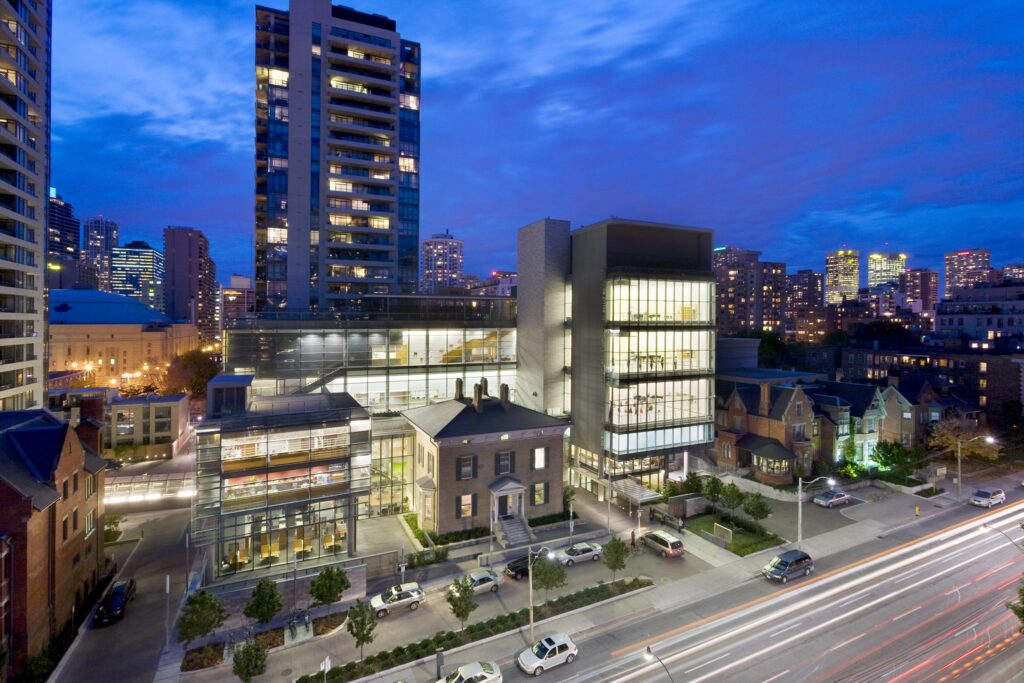
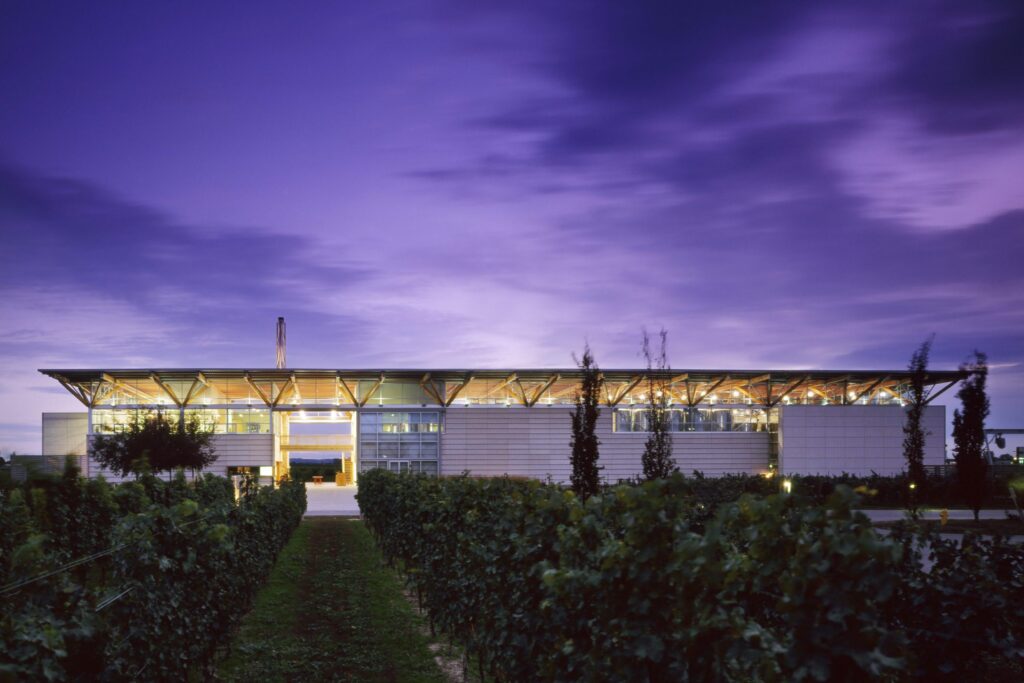
Hall illustrated this approach through projects including the Jackson-Triggs Niagara Estate Winery, completed in 2001, and Canada’s National Ballet School, completed in 2005. Each offered an opportunity to consider how architectural decisions can shape the experiences of the people who use a space.
At Canada’s National Ballet School, Hall described the creation of a gigantic void—a space that dancers would feel compelled to fill through their performances. The example underscored how architecture can do more than accommodate an activity: it can help create the conditions for human expression.
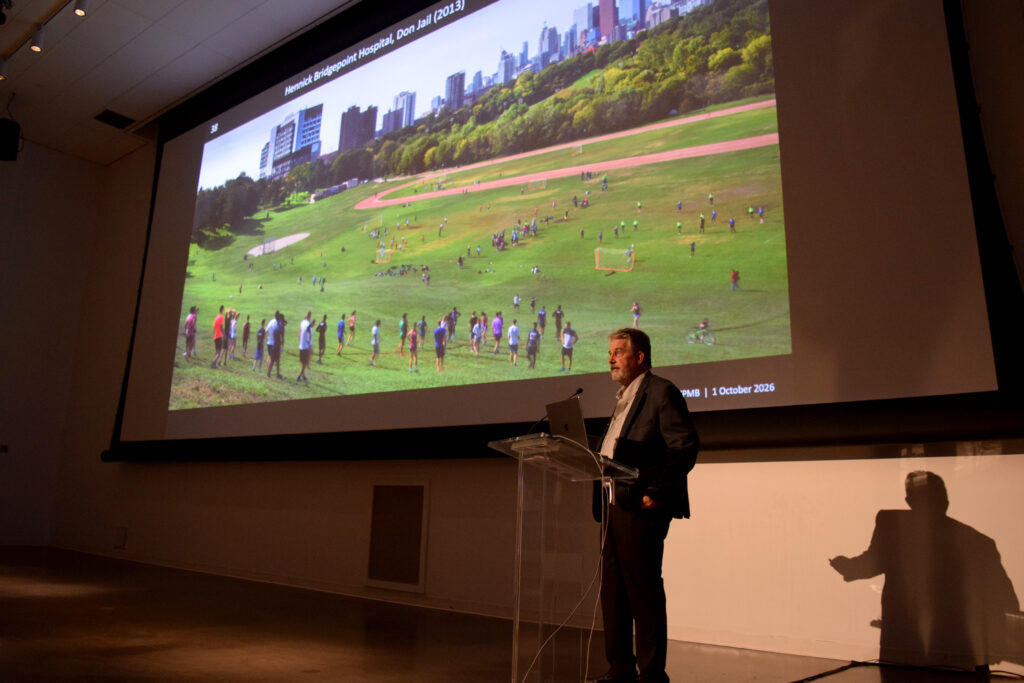
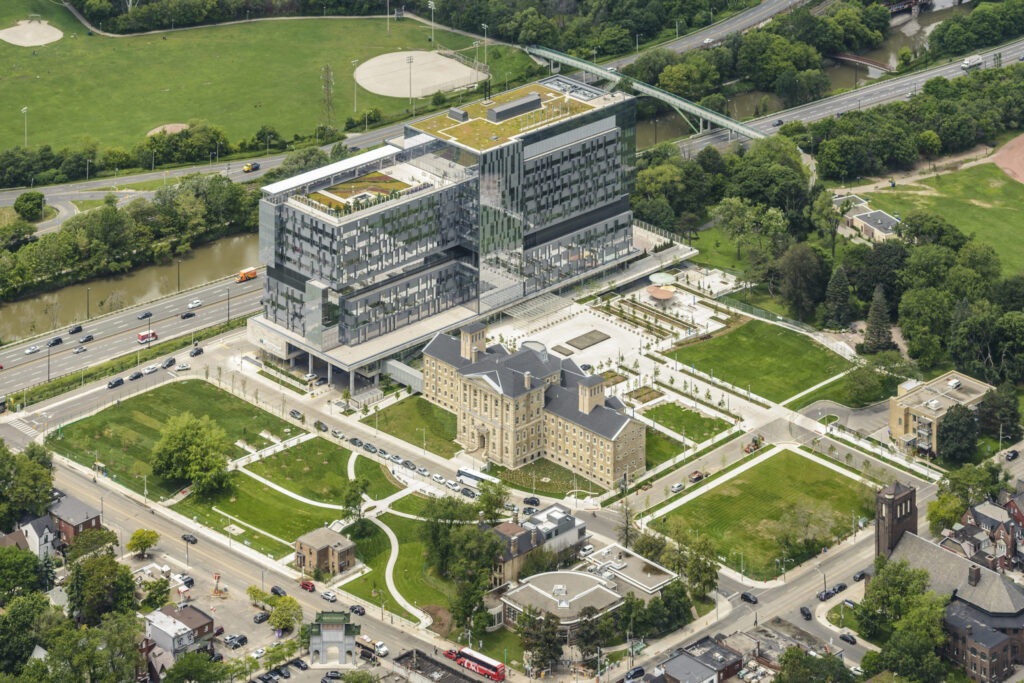
His discussion of Hennick Bridgepoint Hospital, completed in 2013 on the site of Toronto’s former Don Jail, explored another dimension of architecture’s potential. The project’s guiding idea of creating a “village of care” demonstrated how the built environment can support a more connected and human-centred approach to healthcare.
Hall also reflected on the Ottawa Art Gallery, completed in 2018, connecting the lecture’s themes to a cultural institution that brings people together through art and public space.
Reimagining what our creations can become
An unexpected reference to Frankenstein offered another way to consider the responsibilities and possibilities of making. The story of a created being prompted reflection on what our innovations might become beyond their original intentions.
For architects, that means remaining open to unfamiliar ideas and resisting the temptation to rely on established approaches simply because they are familiar. Hall reflected on the value of having avoided specialization throughout his career, allowing him to continue learning and challenging conventional ways of working.
Think in three dimensions—and make things
For students preparing to enter the profession, Hall’s advice extended beyond developing design ideas. He encouraged emerging architects to learn how to use both their hands and their minds, emphasizing the importance of making things and developing the ability to think three-dimensionally.
The advice offered a reminder that architectural thinking is not confined to drawings or digital models. Working with materials and building physical things can help designers explore ideas, understand how they take shape and discover possibilities that might otherwise remain unseen.
Curiosity was central to his message: listen, ask questions, challenge assumptions and look for ways to improve the world as it exists today.
At the conclusion of the lecture, Hall welcomed questions from students, offering further advice and insight into the realities of architectural practice. The exchange gave emerging architects an opportunity to engage directly with a practitioner whose career has been shaped by varied projects, collaborative relationships and a continuing willingness to learn.
Ultimately, The Opportunity of Architecture was an invitation to see design as an ongoing process of discovery. By approaching challenges with curiosity, listening to the people involved and remaining open to new possibilities, architects can help create places that do more than meet immediate needs—they can enrich everyday life and make room for something better.