New book by Prof. Federica Goffi: Architecture in Conversion and the Work of Carlo Scarpa
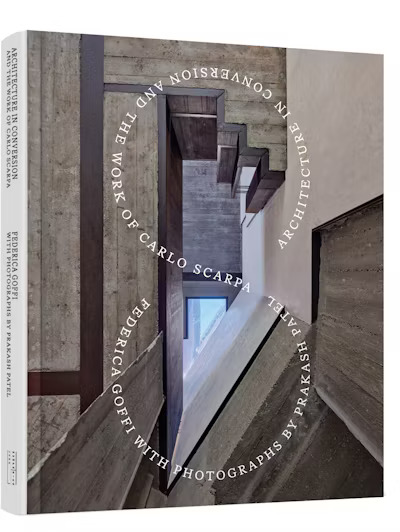
Cover and book design by Rosa Nussbaum (Studio Christopher Victor).
Over the past 10 years, Professor Federica Goffi’s research has focused on the notion of architecture in conversion through the work of Carlo Scarpa, an important 20th-century Italian architect and designer known for his ability to reimagine museums and public spaces.
Her latest book, Architecture in Conversion and the Work of Carlo Scarpa, represents the culmination of this research, which includes interviews with collaborators and studying his drawings and built work in Venice, Verona, Treviso, Possagno, Altivole, and Palermo, Italy.
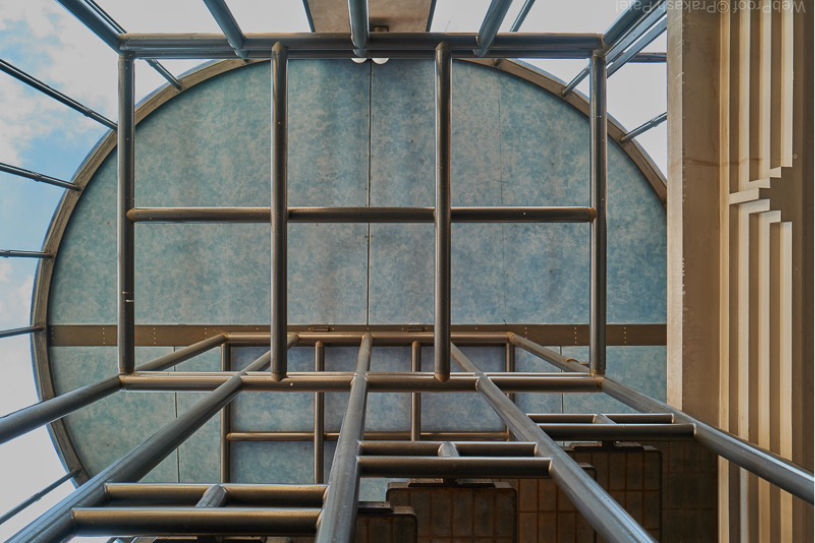
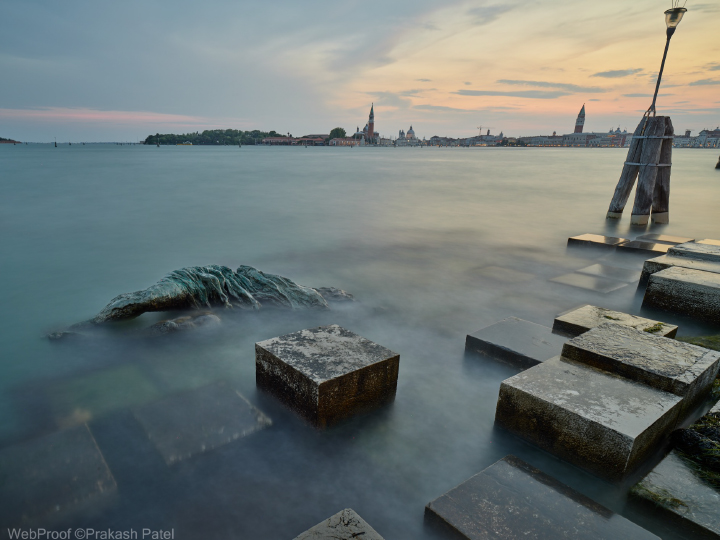
Published in December 2025 by Lund Humphries, the book is complemented by the photography of American architect Prakash Patel. It will be available through Carleton University’s MacOdrum Library, and also at Lund Humphries.
Dr. Goffi is a professor at the Azrieli School of Architecture & Urbanism, where she has taught since 2007.
Her research concerns the renewal of buildings, whether they be heritage or not, questioning the relationship between architecture and time. Starting from the idea that a building is a sustainable work-in-progress and not the result of a single event of design, her work investigates built conservation as a form of invention and imagination.
Conversion is a “practice aimed at re-contextualizing ideas, details or buildings along with their sites through adaptive change, creating de facto projects within (other) projects or stories within (other) stories,” Goffi writes. “It thus allows us to re(enter) a pre-existing reality anew, through radical re-interpretations that contribute to an inclusive sense of cultural orientation.”
The book, illustrated by Carlo Scarpa’s (1906-1978) drawings and new photography, provides insight into Scarpa’s approach to conversion in architecture: more than simply a change of use, but about a sense of place and the evolution of building, sites, and culture over time.
Goffi argues that approaching architecture through conversion offers a more inclusive practice that moves towards an understanding of sites through their accumulating histories in pluralistic societies, including their contradictions and difficult memories.
“Architecture’s turn to conversion advocates for a radical shift from historical materialism to a plural culture of storytelling(s), where collective memories are diverse and inclusive,” she writes.
About Architecture in Conversion
“Storytelling in architecture is plural, and it can, sometimes, embody conflicting histories,” writes author Federica Goffi. “This underlines the urgency of offering plural and inclusive accounts of co-sited memories of historical events, irrespective of whether these are traumatic, celebratory, or commemorative.”
In this context, the work of Modernist architect Carlo Scarpa is exemplary of an in-between practice, which is neither architecture nor conservation, but rather, architecture in conversion, dependent upon plural storytelling(s) narrated through time, weather, and tempo. This book discusses the notion of architecture in conversion, revealing it to be radically different from current conservation practices, and to entail more than a change of use. Scarpa’s work represents ‘a radical turn in how we see or understand something’.
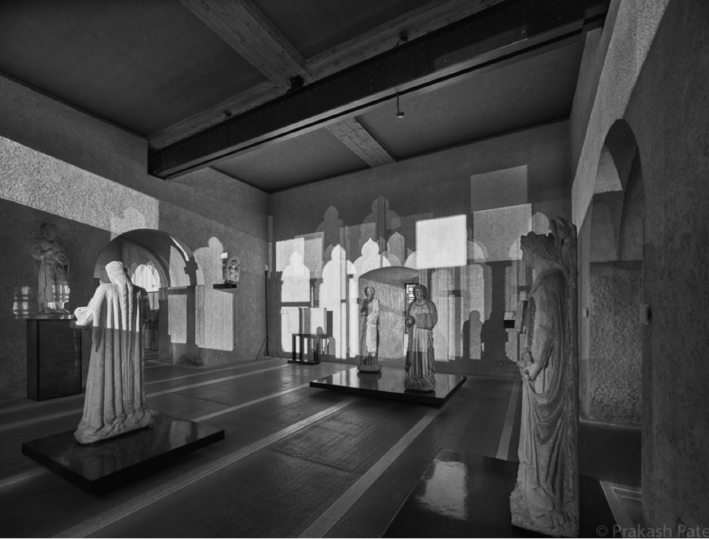
The significance of time, weather, and tempo within Scarpa’s work, as well as the influences of artists such as Man Ray (1890-1976) and Emilio Vedova (1919-2006) and composer Luigi Nono (1924-1990), are revealed through a close analysis of Scarpa’s drawings and details from key buildings and their histories of multiple authorship.
The book examines drawing as central to Scarpa’s practice: in lieu of creating physical models, his multi-directional drawings foreshadow the orbital movements of digital modeling techniques.
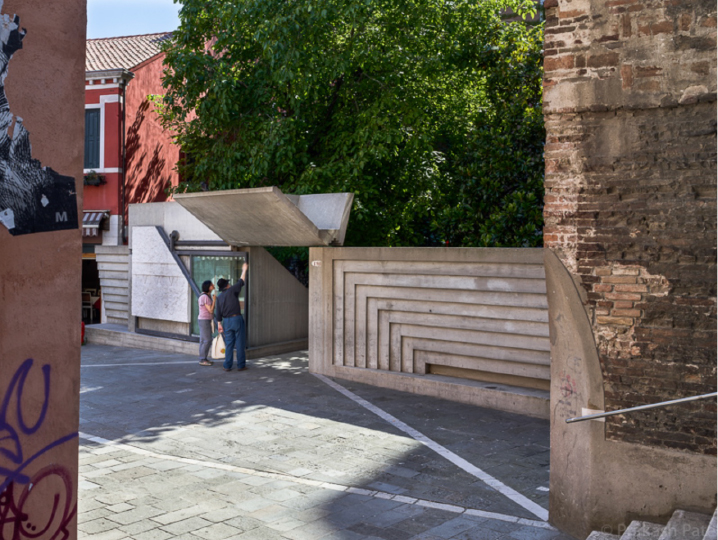
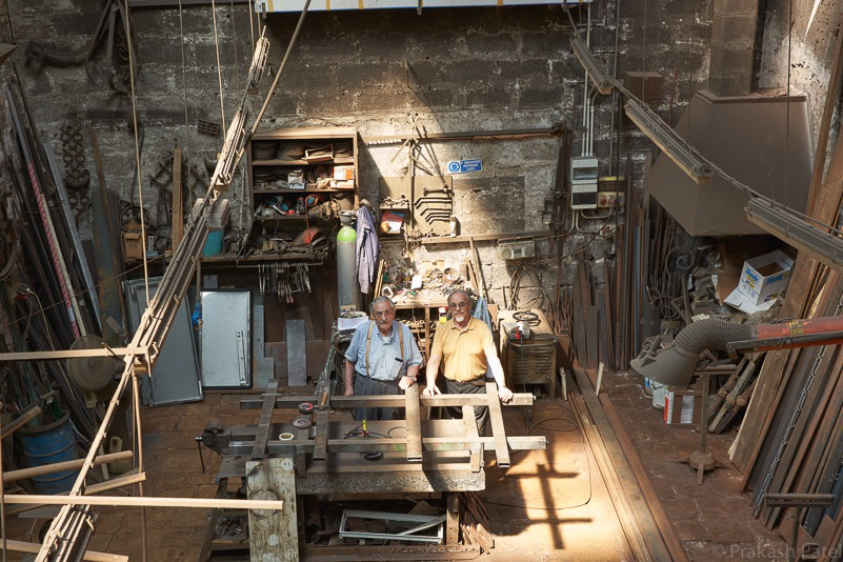
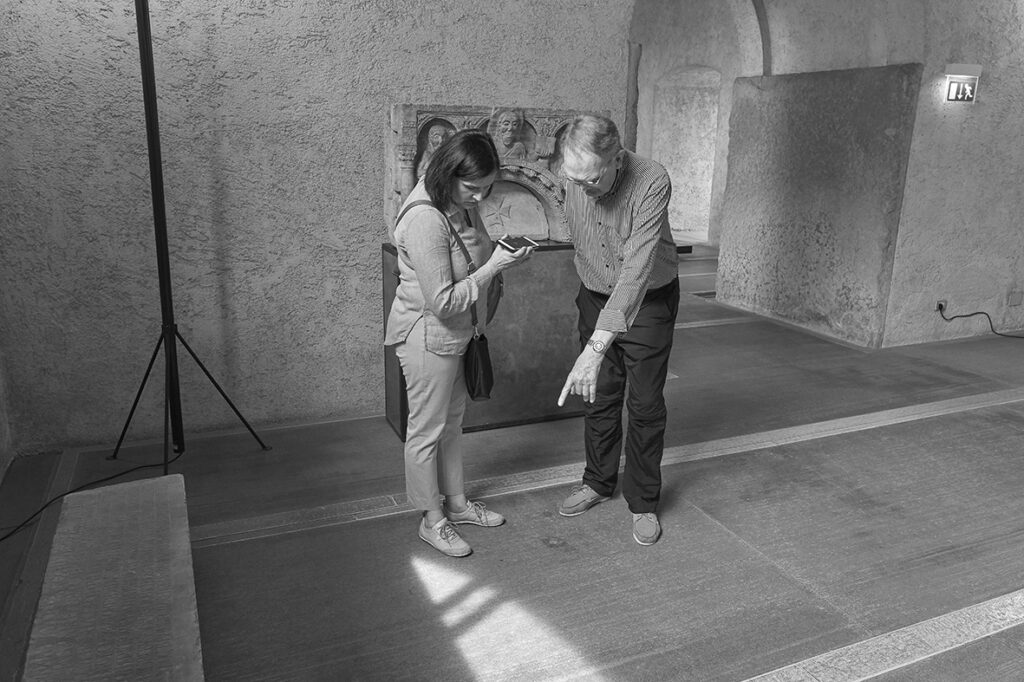
© Prakash Patel
Based on discussions with many of his collaborators, like architects Sergio Los, Franca Semi (1943–2019), Guido Pietropoli, Valter Rossetto, Scarpa’s son, architect Tobia Scarpa as well as craftspeople, such as the Zanon brothers, Francesco and Paolo; architectural technologist Angelo Rudella (1938– 2024) among others, the book highlights Scarpa’s collaborative approach.
It concludes by introducing the idea of ‘unfinished architecture’ and discussing various contemporary architects’ projects which follow Scarpa’s approach to the conversion of buildings.
Illustrated by over 170 images, the volume opens with an Introduction to Architecture in Conversion and is divided into three parts: Part I: Time Sensing; Part II: Weather and Cyclical Architecture; Part III: Tempo and Allographic Architecture. The Plural Beginnings of Conversion.
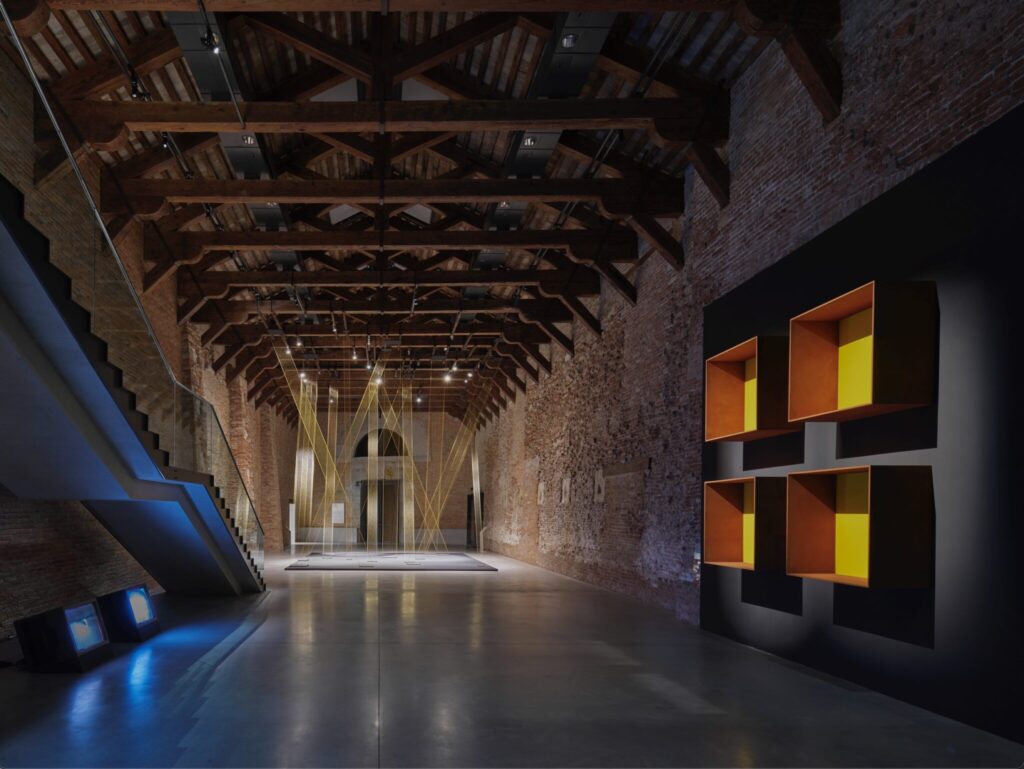
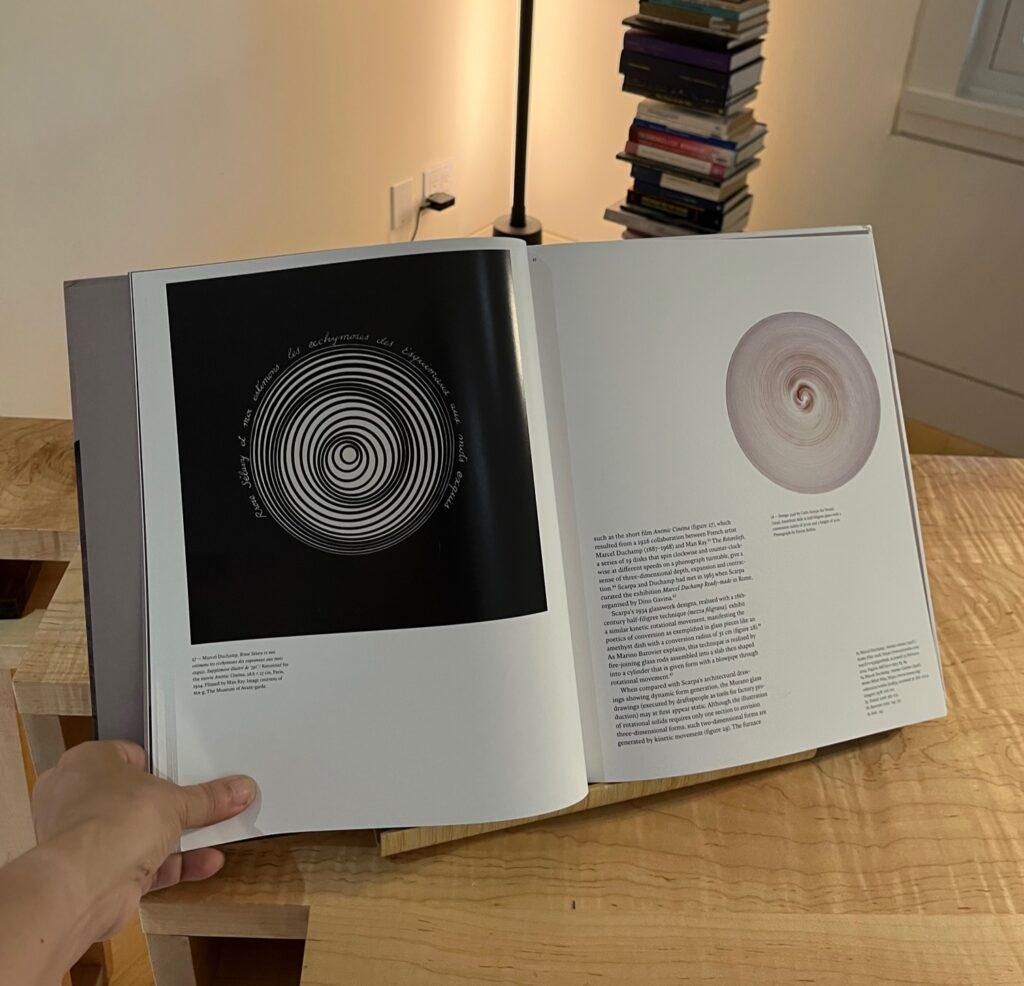
Right page: Design 3546 by Carlo Scarpa for Venini (1934). Amethyst dish in half-filigree glass with a conversion radius of 31 cm and a height of 9 cm. Photo by Ettore Bellini.
The book includes reflections on the work of modernist and contemporary architects such as Pierre Chareau (1883–1950), Le Corbusier (1887–1965), Lina Bo Bardi (1914–1992), Édouard François, David Chipperfield, Tadao Ando, Renzo Piano and artists, among them Man Ray (1890–1976), Marcel Duchamp (1887–1968), Emilio Vedova (1919–2006), Tyra Lundgren (1897–1979), Donald Judd (1928–1994), Lygia Pape (1927–2004) and composer Luigi Nono (1924–1990).
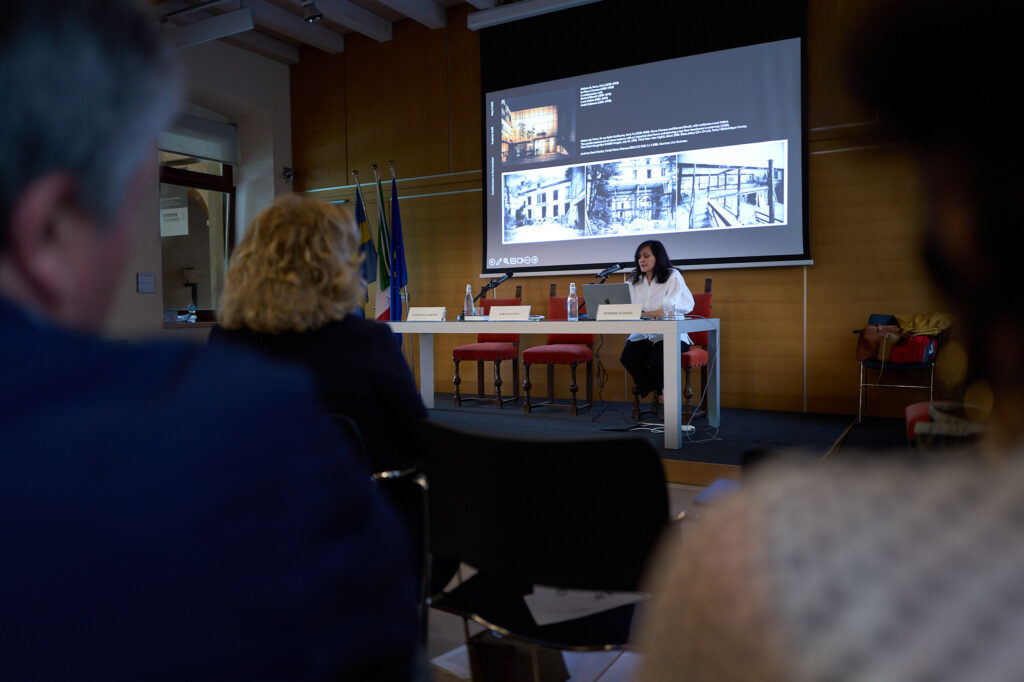
In April 2025, Goffi presented her work in Verona. The lecture, hosted at the Museo Degli Affreschi G.B. Cavalcaselle (Galtarossa Room), was organized by Dr. Ketty Bertolaso, curator of the Carlo Scarpa Archive at the Castelvecchio Museum in Verona. The presentation was part of a series of conferences organized by the Civic Museums of Verona, in collaboration with the University of Verona and with the support of the Friends of the Civic Museums of Verona, Italy.
Praise for the Book
Advocating ‘transhistorical practices of conversion’, an ‘allographic architecture of becoming’ and an ‘imagination of multiple beginnings’ — as seen in the work of Carlo Scarpa and other practitioners — this rigorously researched and richly illustrated book invites us to rethink architecture, the profession, and education through the lens of adaptability.
In an era of scarce resources and urgent sustainability challenges, Architecture in Conversion repositions conversion as a cultural practice in sharp contrast to the carte blanche ethos of orthodox Modernism.
The book offers an invaluable resource for architects, historians, theorists, educators, students, heritage specialists, and built environment professionals, illuminating how buildings and sites are shaped through multi-authored interventions over time.
—Sophia Psarra, Professor of Architecture and Spatial Design, University College London, The Bartlett School of Architecture
Goffi offers a rigorous, innovative, and inspiring contribution to the fields of architecture in conversion, restoration, and adaptive reuse, linking them to the multifaceted concept of time. The work of Carlo Scarpa, which embodies restoration, historical layering, and architectural innovation, is tied by the author to modern and contemporary experiences. Scholarly and visually compelling, it is beautifully illustrated with photographs by Patel.
— Alba Di Lieto, Politecnico di Milano; former Architect of the City Museums and Curator of the Carlo Scarpa Archive, Verona, Italy
This book does not limit itself to describing Scarpa’s buildings, but presents insights based on first sources (buildings, original drawings, and other archival materials) and interviews with Scarpa’s collaborators. In doing so, it explains the underlying reasons for his unusual practice, providing a more profound understanding of the meaning of the work. Illustrated with wonderful photographs by Prakash Patel, it does not give obvious answers but formulates questions — exactly what every designer should continually do!
—Valter Rossetto, Architect
About Federica Goffi and Prakash Patel
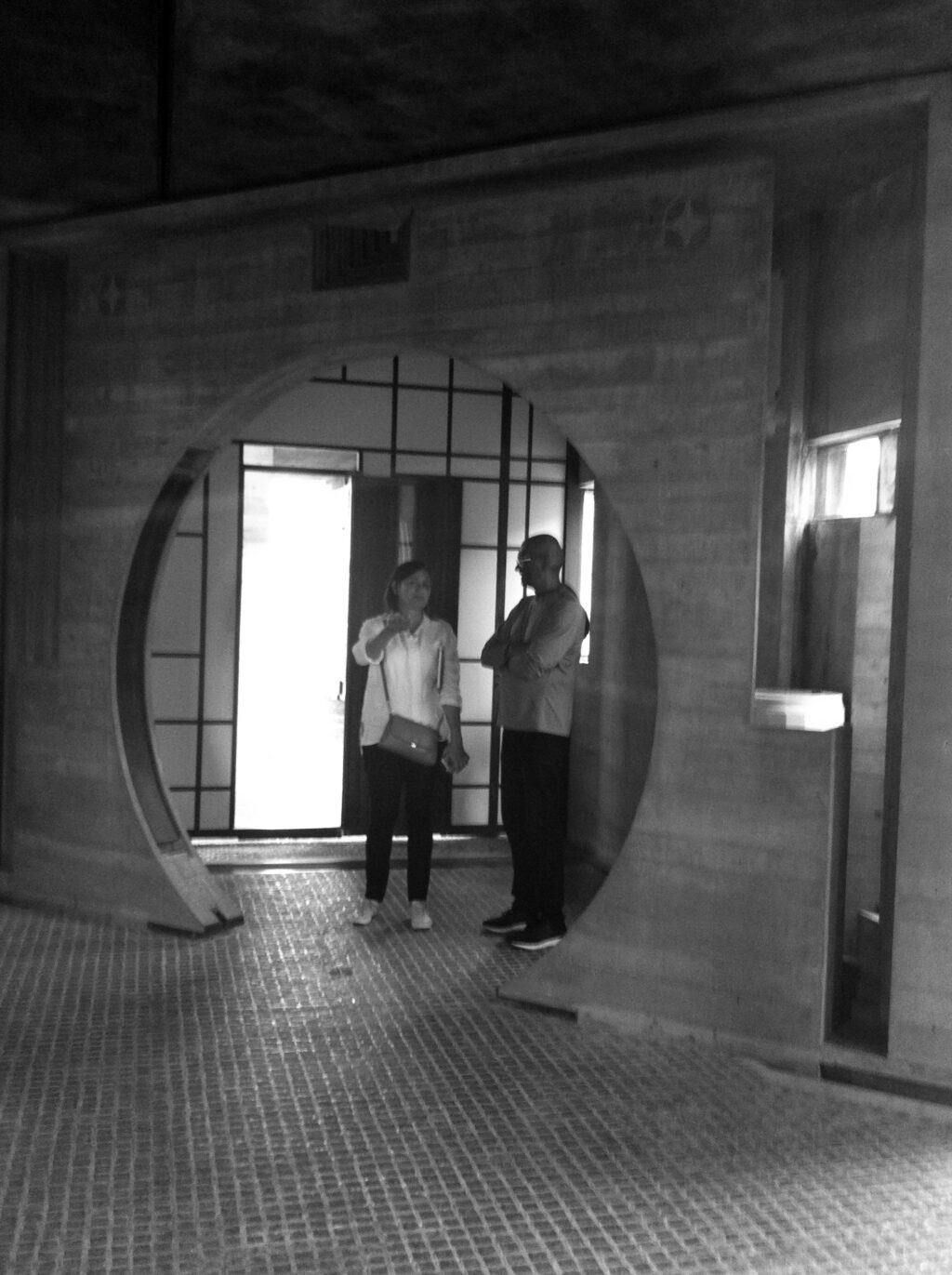
Memoriale Brion, Tempietto, San Vito d’Altivole, Treviso (1969–1978), Carlo Scarpa.
@ Federica Goffi (2018).
Federica Goffi is a professor of architecture at the Azrieli School of Architecture & Urbanism at Carleton University, where she has taught since 2007. She is the chair of the Carleton Research | Practice of Teaching | Collaborative (C R | P T | C). Goffi holds a PhD from Virginia Tech in Architecture and Design Research. She has published book chapters and journal articles on the threefold nature of time-weather-tempo.
Goffi’s research concerns the renewal of buildings and questions the relationship between architecture and time. She authored Time Matter(s): Invention and Re-imagination in Built Conservation: The Unfinished Drawing and Building of St. Peter’s in the Vatican (Ashgate, 2013). She has been a guest editor of a special issue of the Routledge journal Architecture and Culture, titled “And Yet It Moves: Ethics, Power and Politics in the Stories of Collecting, Archiving and Displaying of Architectural Drawings and Models” (September 2021). She edited The Routledge Companion to Architectural Drawings and Models: From Translating to Archiving, Collecting and Displaying (May 2022). In addition, she edited the books InterVIEWS: Insight and Introspection in Doctoral Research in Architecture (Routledge, 2020) and Marco Frascari’s Dream House: A Theory of Imagination (Routledge, 2017). She co-edited Ceilings and Dreams: The Architecture of Levity (Routledge, 2019). Architectures of Hiding: Crafting Concealment | Omission| Deception | Erasure | Silence (Routledge 2024) and (Un)common Precedents in Architectural Design (Routledge 2025). Goffi holds a Dottore in Architettura from the University of Genoa, Italy. She is a licensed architect in her native country, Italy.
Prakash Patel is an American architectural photographer and architect with 28 years of experience in the field. His work has been published in architectural journals and design media worldwide. Fueled by a passion for design, Patel captures the ephemeral qualities of space while revealing the ideas behind the design. He is a licensed architect in the District of Columbia, where he lives and works. Patel studied architecture at Virginia Polytechnic, USA.
About Lund Humphries
Lund Humphries is a long-established, independent publisher of beautifully produced books on art, architecture, and design. Their list encompasses books for visual arts scholars, professionals, students, and art enthusiasts. Many of their books are published in partnership with leading museums and galleries internationally, often to accompany exhibitions.